
Simple never fails

If you’re anything like me, you go through phases of using only digital tools or only analog tools. Sometimes a bit of both. But for me it seems to mostly be one or the other.
Right now I’m in an analog phase.
And not just any analog phase… I’m in a deliberately simple analog phase.
I’ve noticed that the more I’ve used AI in my workflows, the more words I’m faced with on a daily basis. It’s so quick to generate reams of information. Yet it’s unfortunately not so quick to read it all.
And whilst I do still use digital tools for certain things like project management (I’m never not going to because I run an online web design business in the 21st century), I find that whenever I want simple, I turn to analog.
At the moment my analog tools are taking three distinct forms:
- A journal
- Index cards
- Print outs of my digital documents
I think there’s something to be said for how we predominantly use something and how our brain is then used to using said thing. For example, I am increasingly finding it hard to read things on my laptop screen. The words just don’t seem to register in the same way as on paper. And I (unscientifically and anecdotally) think that’s because of the framing of the thing we’re using.
People often say if you want to build a good writing habit you want to sit at the same desk at the same time every day. This is because it tells our brain – this is writing time.
The problem with my laptop is that I use it for both work and leisure. I use it in my office, on my couch (where I’m writing this right now), on my balcony and very occasionally in bed. There’s no one single place where I am in work mode vs leisure mode. I even sit at my office desk to do leisure things.

So, it makes sense to me that I would find it hard to absorb written information on my laptop screen because it is used for so much more than just reading information.
Now, if we turn to my analog tools… My journal is only ever my journal. My index cards are only ever for my to-dos or bitesize thoughts or doodles. My print outs of my digital documents are only ever for reading my documents.
I can’t watch YouTube in my journal. I can’t reply to messages with my index cards. And I certainly can’t send invoices using my printed documents.
This simplicity of use is where these analog tools shine.
If you’re curious, here’s a run down of how I’m using each one at the moment:
1. Journalling
I used to have a daily journalling practice for years. But these days I don’t feel the need to journal every day. I now use it as a tool when I can feel that I need it. When I know there’s some untangling I need to do in my mind. I use it to process my thoughts or capture things that feel important. It’s just me, my TWSBI Eco Serpentine fountain pen (in extra fine) and my regular brown Traveler’s Notebook — oh and the birds if I’m sitting outside.
2. Index cards
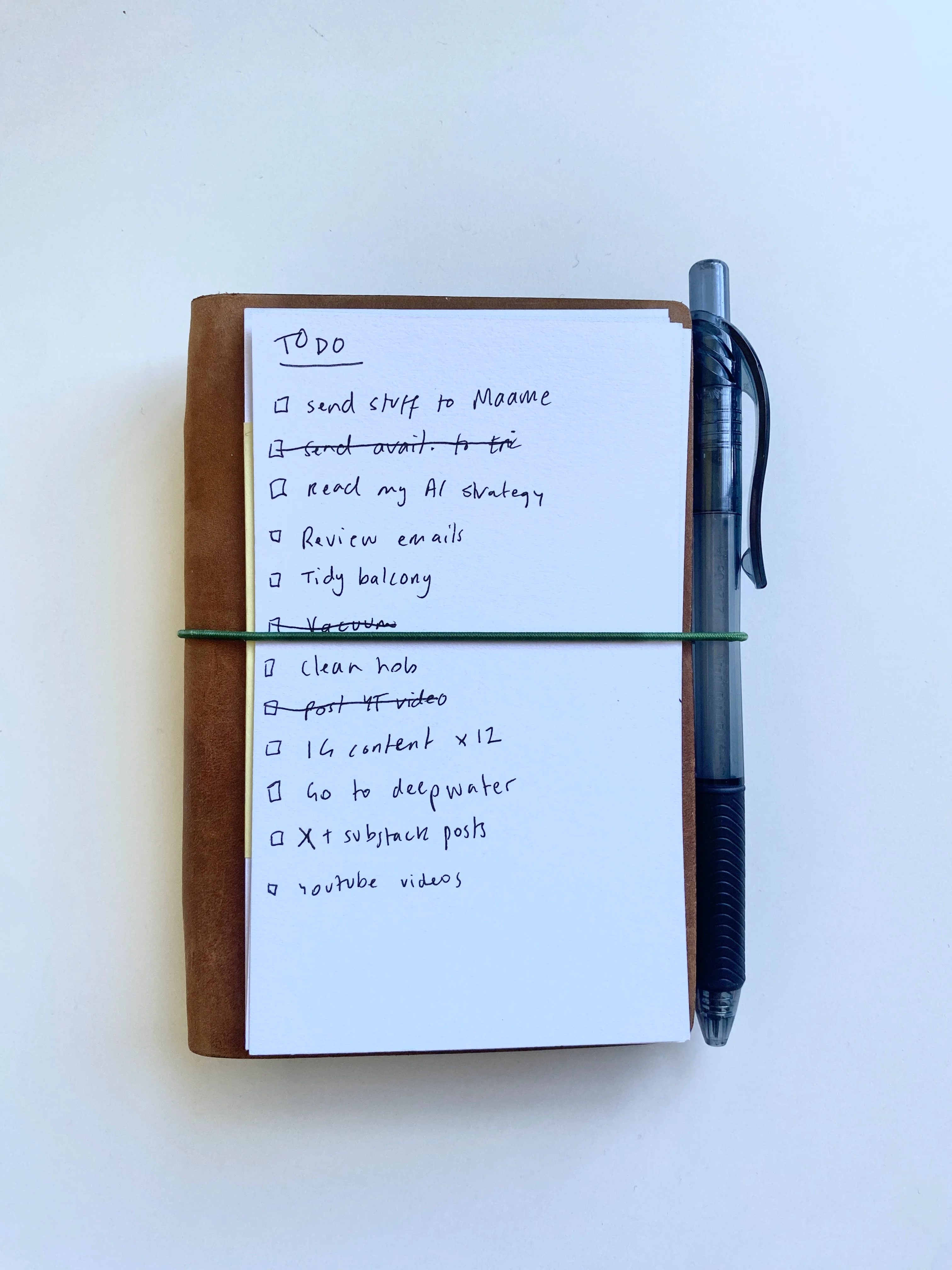
These have been so great lately in helping me focus on what matters and forgetting the rest. They’re small enough that I don’t feel overwhelmed looking at my list of tasks (because I can only fit so many on one) and they’re small enough that I can easily take them with me wherever I am.
Another thing that I find difficult with digital that analog solves so brilliantly is that everything I have digitally can only be seen in a 13” area (or 27” if I’m using my monitor). That’s just not enough space to see multiple things at once. And if I’m viewing something in full screen then I literally can’t see anything else but that single thing. With analog tools I’m able to spread stuff out as much as I need. I can spread things out on a table. I can place things in front of me. I can visually see a pile of documents and understand what’s in the pile.
That’s why I’ve been using my index cards tucked neatly on the outside of my camel passport Traveler’s Notebook and held down with the elastic. My tasks are always there staring right at me.
3. Printed documents
You know when something’s just a little bit out of reach or sight and so you never really use it? (It’s the same out of sight out of mind principle that I’m really talking about here). Well, recently I moved my printer out from inside my office cupboard to on my IKEA Alex drawers.
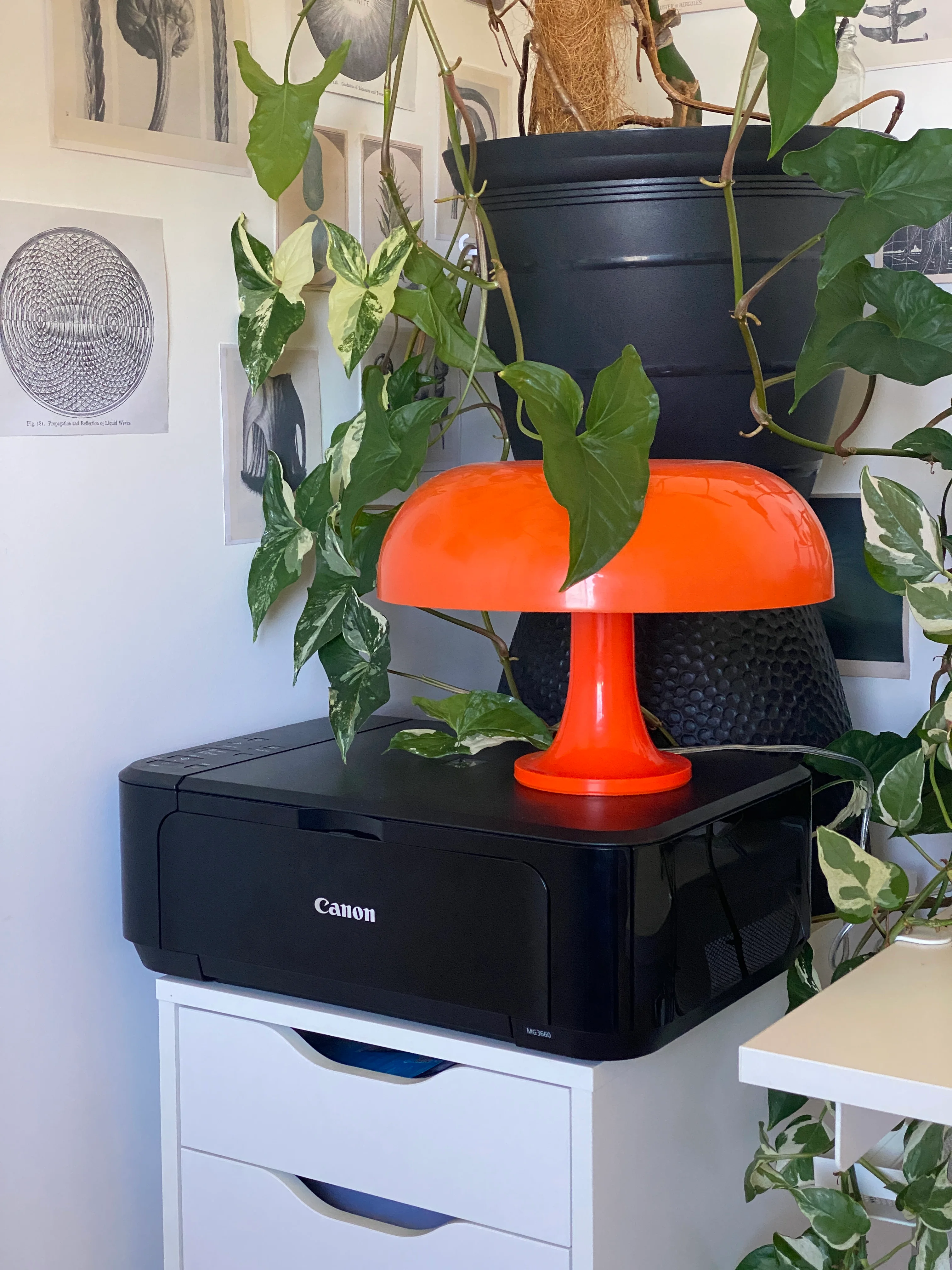
How many pages do you think I’ve printed since I moved it a month ago?
More than I have probably printed in the last 3 years.
I use Claude a lot to think through my ideas and strategies for my business and as I said at the start, it often outputs a lot of words. Most of it is good, some of it is unnecessary. But as I’ve become really fatigued at reading on my screen, I’ve naturally turned to printing out the documents so that I can read them, focus on them and scribble thoughts all over them as I think them through.
That’s the beauty of simplicity. It’s inherently quiet and it allows you to focus on what’s right in front of you.
Digital will never go away for me. But I do find whenever I want simplicity, I always turn to analog.
And in a world full of noise — simple never fails.